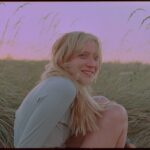
Title: Tristesse
Foreign Title: トリステス
Year: 2026
Country: Japan
Language: In Japanese with English Subtitles
Director: Yuri Muraoka
Click here to see the cast and crew
This being the film’s North American Premiere provides an excellent opportunity to finally experience contemporary experimentation by Yuri Muraoka, the multi-award-winning filmmaker and poet, whose work has been described as “disturbingly beautiful” and her subject matter as “the search for one’s own self.” Her bio describes her short films as “self-portraiture” that are ‘self-created and self-performed.’
If close reading was invented to study modern poetry, close viewing should be mandatory for experimental film.
For the first three minutes, we are eased into the matter-of-fact narration of Kurumi, the family cat fighting a possibly fatal illness. Accompanied by Chopin’s étude in E major (often called Tristesse), this undeniably sad situation is presented through tender comments and lovingly shot close-ups.
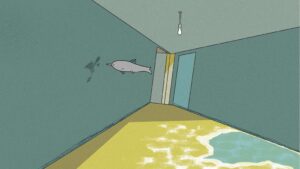
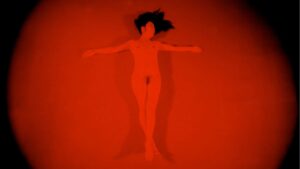
But following this introduction – including many spicy poeticisms that are arresting, such as ‘I want to crucify and preserve “time” to break it’, and ‘I take many photos of light on my phone to fill the void that was chipped away from my dignity’ – the work begins to unravel; unusually, but with grace and forethought, images are being ripped away from the non-stop staccato narration, taking on their ‘disturbingly beautiful’ aspects. Suddenly, yes, it has become complicated. She addresses herself: “Dear Ms. Yuri Muraoka. Yes, I’m Yuri Suzuki, your real name.” Her “self” is two people, she admits: ‘the filmmaker poet and the home caregiver. And they rarely meet.’
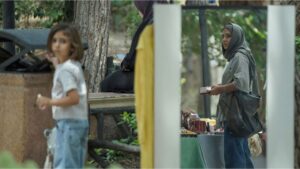
Inevitably, it seems, Yuri is forced to confront life’s vicissitudes. Images of pinned, wondrously coloured butterflies are juxtaposed with the reality that her teenage daughter Hana has nearly succumbed to a form of self-harm, which Yuri expresses as “your pain and sadness/continue to pierce my soul.” Unblinking, she stares into the lens: “Awkwards words exchanged / through the troublesome door / that stands in the distance between us.”
You can’t say we haven’t been there.