Title: I Plant My Hand In The Garden
Foreign Title:
Year: 2026
Country: Germany / Serbia / USA
Language: In English, Farsi, German, and Serbo-Croatian with English subtitles
Director: Boris Hadžija, Hoda Taheri
Click here to see the cast and crew
From my own perspective, this is one of the best films at the festival. Highly intelligent, both cinematically and narratively, it is playful and whimsical, effortlessly breaking the rules without forcing, announcing, or exhibiting it. It flows from one story to another, shamelessly changing codes and approaches, all with an effortless sense of continuity.
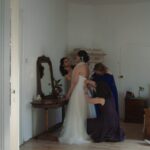
It’s the story of Hoda, an Iranian refugee in Berlin, and Boris, a Serbian, and their wedding. Her mother and sister somehow manage to come over from Iran, maybe seeking refuge themselves. The families meet, engage, and care for one another, overcoming language barriers. But the film is not really about weddings. The event happens between one scene and another, almost without us noticing. Hoda is pregnant, and although everybody knows and talks about it, telling stories about pregnancy, it is never an issue, nor the subject of the film. Neither is their queerness, nor their fathers’ problems, their ex-partners, or even immigration and cultural differences.
Hoda and Boris met in film school and collaborated on several films in which they directed and starred. In their own words, “this is a fiction film shaped by autobiographical experiences,” and that juxtaposition is present throughout.
They effortlessly take the simplest event, or the heaviest one, introduce a subtle twist, and continue as if nothing has changed. While the film deals with serious issues such as immigration, pregnancy and parenthood, queerness and identity, it approaches them on a philosophical, existential, and narrative level, rather than through their emotional or dramatic dimensions. Once the storyline is set, the directors turn their attention to their craft and their central interest: form and the boundaries of storytelling.
Slowly and gently, they draw us into a world that questions the foundations of the objects, actions, and terms that define our everyday lives. What is identity? Parenthood? Marriage? What is the purpose of a passport, a funeral, or fatherhood? These questions emerge through a variety of cinematic and theatrical techniques.
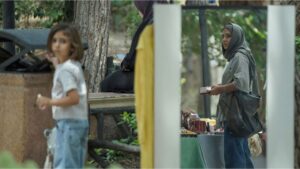
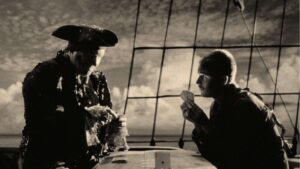
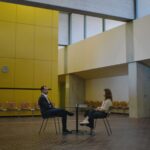
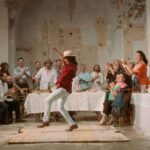
A static, fixed camera looks through doorframes, windows, and mirrors, placing the viewer in the position of a passive observer. We are invited in but remain uninvolved for most of the time. Then, suddenly, we are placed at the centre of the frame, unable to shift our gaze. The directors use theatrical methods to move between past and present, employing costume changes and props to keep us alert.
Together with the absence of a conventional dramatic core, these choices allow us to go deeper into, and question, the fundamental subjects the film raises: cinema, life, identity, and the stories we tell about ourselves.
A film that stays with you for days after watching.
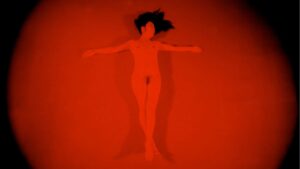
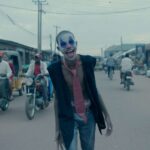
PS: I don’t usually care about trigger alerts, but there is a moment with an explicit image that may surprise some viewers, so be alert.